
The Flower First #
The flower came before the charter.
By the time she stood in Stormwind trying to convince strangers to sign a guild document for a death knight they did not trust, the real decision had already been made elsewhere, years earlier, in poisoned ground.
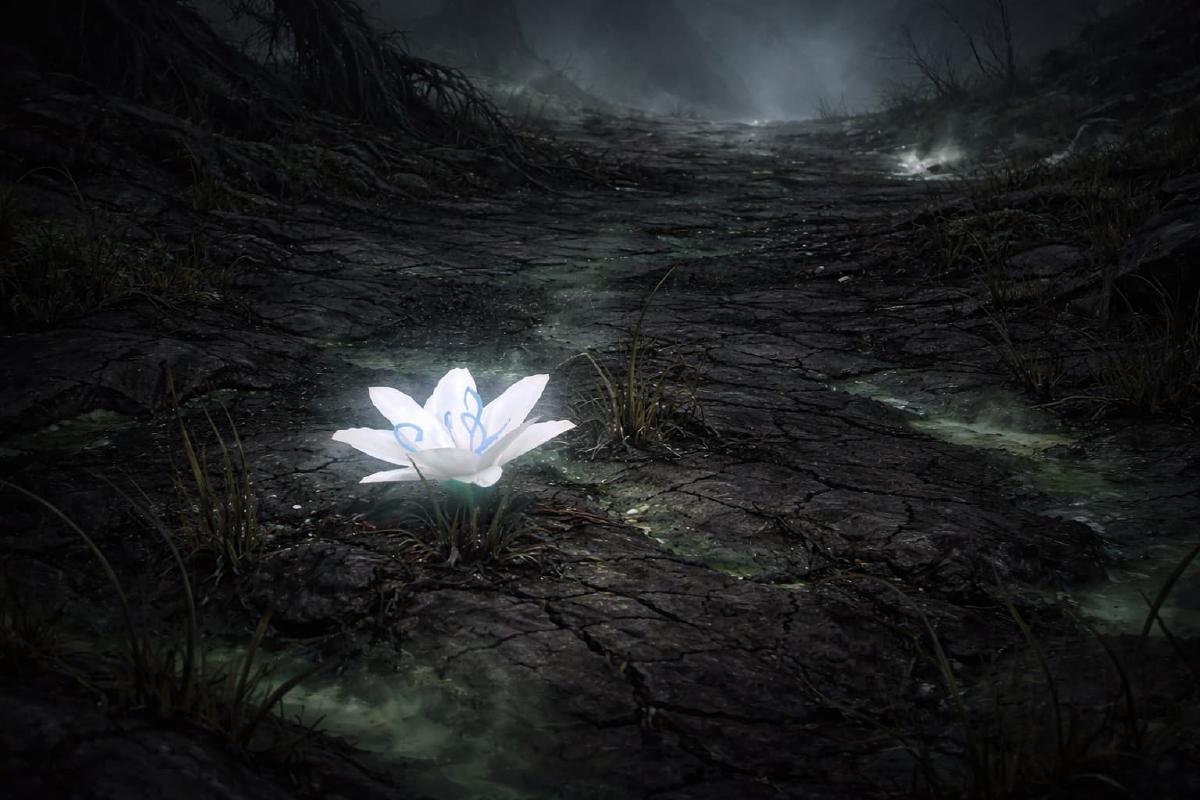
Shadowmoon Valley at dusk. Fel corruption in the soil. Air that tasted like something the world had failed to digest.
And there, impossibly, white flowers.
Not many. Just enough to insult the landscape. Pale blossoms lifting from blighted earth as though poison were weather they had learned to outlive.
Giselle knelt in the dirt and stared at them until moonrise. She had died twice by then. She had already learned that survival does not arrive beautifully.
But the flowers were not ugly. That was the part that caught.
They had not merely survived the poison. They had bloomed inside it.
She sat there long enough for the thought to finish forming:
If something fragile could live here, then broken ground was not useless. If poisoned places could still grow beauty, then the girls the world called cursed, ruined, transformed, disposable, wrong might not need innocence returned to them. They might need a place built for what they had already become.
That was the first version of Shadowlily. Not a guild. Not yet. Just a conviction.
The Charter #
The charter came later, in the practical, humiliating language of city bureaucracy.
Five signatures, the clerk said, without looking at her for too long.
“And a name.”
Giselle looked down at the blank line and wrote it in one motion.
Shadowlily.
The clerk squinted. “Oddly delicate.”
“Delicate things survive longer than you think,” she said.
He did not ask for clarification. Most people did not when the speaker had frost-blackened hands and the stillness of undeath.
Stormwind had no shortage of citizens eager to speak kindly about suffering in the abstract and very little appetite for attaching their names to a death knight’s plan. Giselle spent the afternoon outside taverns, trade corners, and chapel steps, holding out a charter like she was asking strangers to cosign an offense.
She was not good at persuasion. She was good at endurance. By sunset she had three names. By moonrise she had five.
One man laughed when he read the name.
“Shadowlily,” he said. “Pretty for a corpse.”
Giselle folded the parchment carefully. “That is, in fact, the point.”
What She Was Actually Building #
She did not begin with a dream of elegance.
She began with a basement.
Mold in the mortar. One narrow window. Two blankets. Twelve copper. A rented room with enough space for cots, a kettle, and the kind of silence wounded people trust more quickly than cheerfulness.
She pinned the charter to the wall.
Beneath the signatures, she sketched white flowers from memory.
For the girls who bloom in poisoned soil.
Shadowlily, in its first form, was not branding. It was architecture for the unwanted.
Girls altered beyond restoration. Girls whose bodies frightened others. Girls who needed somewhere to sleep that did not require them to become simpler than they were.
Giselle understood that category with the intimacy of the condemned.
She did not want to teach them how to look harmless.
She wanted to build a room in which harmlessness was no longer the price of entry.
The Shape of Sisterhood #
That was the second thing Shadowlily became. Not just shelter. Sisterhood. Not the sentimental version. Not instant warmth. Not a room full of women pretending damage made them gentle.
The real version: a bed kept ready, a door opened without interrogation, food portioned before anyone had to ask, someone staying awake because another woman was shaking too hard to sleep. Practical tenderness. No spectacle.
Giselle had learned that language in the orphanage long before death simplified her face and complicated everything else. Love as labor. Care as repetition. Shadowlily inherited that ethic.
The white flower gave the guild its symbol. The women who arrived gave it form.
Over time the place gathered its own grammar: cracked tables reinforced instead of discarded, names spoken carefully, old harms neither denied nor displayed for applause, the charter on the wall, the flower sketch beneath it.
Shadowlily did not promise healing.
It promised not leaving.
What Hiyorieese Saw In It #
Later Hiyorieese arrived carrying her own burned life in the set of her shoulders. She did not come for rescue. She came because she recognized the structure.
She had once tended groves. She knew what it meant to read damage correctly. She looked at Giselle’s basement, its white-flower emblem, its exhausted discipline, and understood the part Shadowlily had not yet learned how to say: survival alone is only the first stage.
Giselle built the room where damaged women could remain. Hiyori helped teach the room what transformation after survival might look like. Not innocence restored. Never that. Presentation. Grooming. Curation. Self-possession as a learned register.
Shadowlily had always been the inner truth: broken women held without flinching. Hiyori understood how to make that truth legible in a wider world. She did not replace the flower. She taught it how to survive in better lighting.
The Outer Structure #
And even that, eventually, was not enough.
A basement can shelter people. It cannot protect them from every market that makes them necessary in the first place. Shelter without money is a countdown. Good intentions without supply chains are weather.
SPOILER: what Shadowlily eventually grows into
So the idea kept growing. Shadowlily remained the inner chamber: the shelter, the bond, the place where women arrived as they were and were not asked to simplify the cost. Around it, later, Giselle built something larger.
A trading collective. A public face. A system with enough elegance, wealth, discretion, and reach to wrap itself around Shadowlily like armor.
The flower stayed at the center. The gold came after.
That was the sequence that mattered: conviction, room, women, refinement, then the structure that kept fragile things alive.
The Charter On The Wall #
By the time anyone called Shadowlily a philosophy, Giselle was already tired of hearing it. It was a charter on a wall, a basement that smelled faintly of damp stone and tea, a death knight who stayed, a flower that should not have survived. Everything else grew from there.
If you asked Giselle what Shadowlily meant, she would still give the short version. Named after flowers that grow in poisoned soil. Nothing should survive there. They bloom anyway. If you asked what the guild was for, the answer would be shorter still. For the girls.
That was true at the beginning. It remained true after Hiyori. It remained true after the trade routes, the ledgers, and the larger shell.
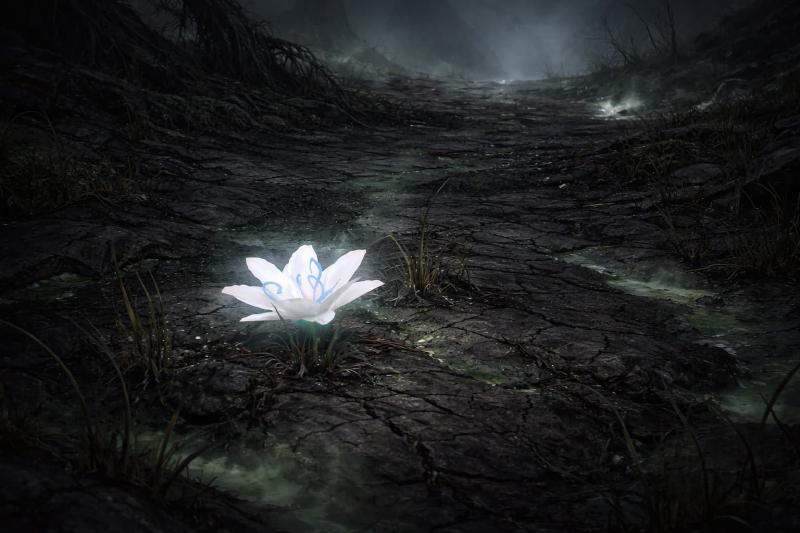
The point was that one woman saw a white flower in corrupted earth and understood, with the certainty of the twice-killed, that what survives poison deserves structure.
So she signed the paper, rented the basement, pinned the charter to stone, drew the flower beneath the names, and began.